 Whiteboard Animation
Education · Physics lesson
Static electricity animation
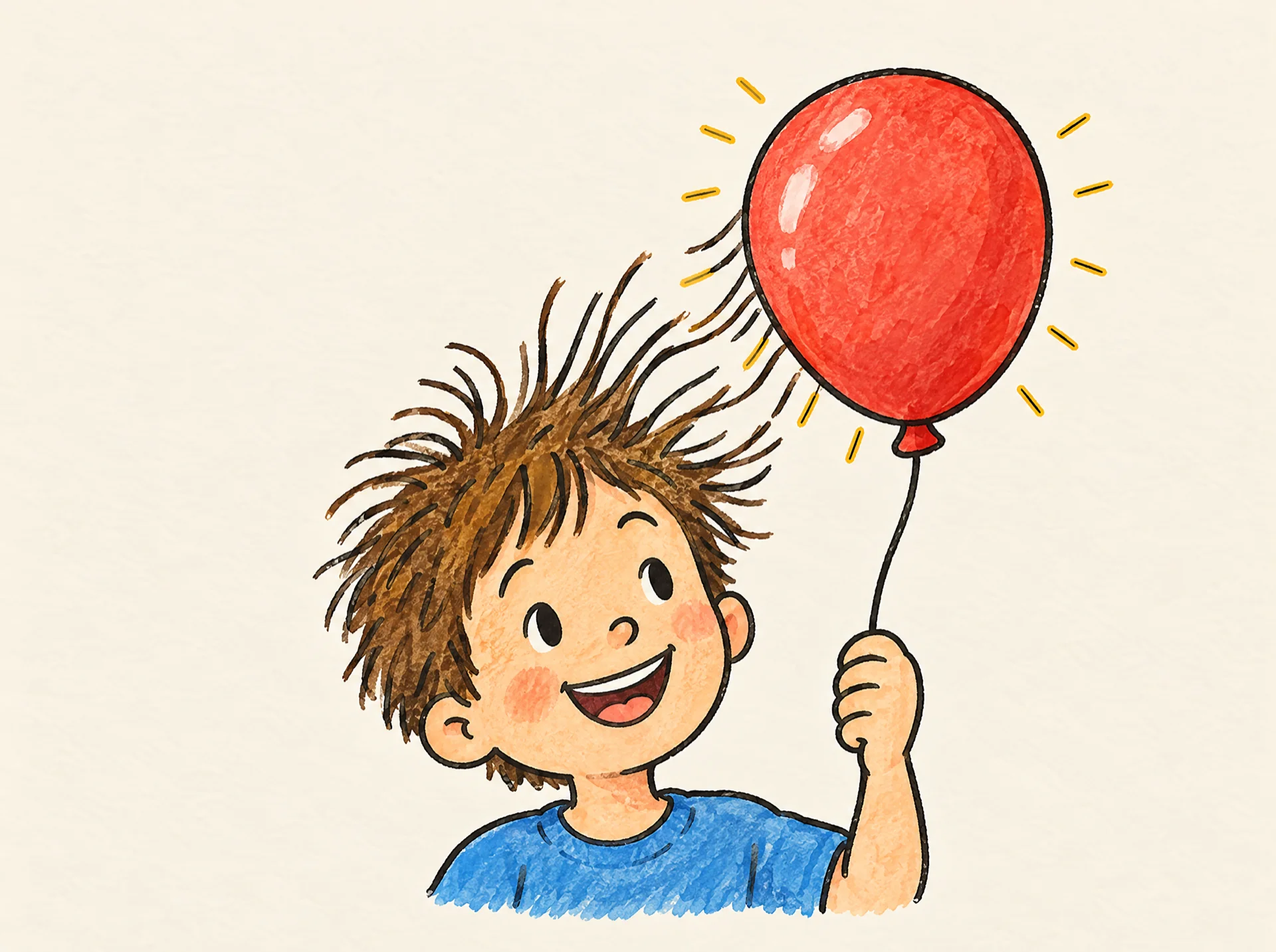
Watch static electricity drawn step by step: a child holds up a red balloon after rubbing it on their hair, and the hair stands up and reaches towards it. A hand-drawn whiteboard animation made from one illustration.
- 1:46 · 2 chapters
- 4:3
- Lines + colour
By Deniffer AlanPublished Tested by Deniffer Alan
Opens Studio with this picture, ready to draw.
The picture it starts from1920 × 1433 px · WEBP
DownloadThe prompt behind the picture
A cheerful child shown from the shoulders up, holding a red balloon just above and beside their head after rubbing it on their hair. Many strands of the child's hair stand up and stretch towards the balloon, attracted to it. Only the child and one balloon; nothing else in the picture. Plain background with lots of empty space, 4:3. Coloured pencil and watercolour marker, clean black ink outlines, warm off-white paper, no text.The picture came from an image model; any finished illustration works the same way, including one you drew. Use the prompt as a starting point for your own topic.
How this clip was made
The picture above was made with an image model from the prompt above; WhiteboardAnimation.ai then drew it, stroke by stroke, as the clip at the top of this page.
- Drawn
- Credits used
- 1
Static electricity, step by step
A script to read over it, timed to the drawing: the lines go down first and the colour arrives on the last beat.
- 0:00Line artRub a balloon on your hair, hold it up, and something surprising happens: your hair reaches out towards the balloon!
- 0:13Everything is made of tiny atoms. Inside atoms are even tinier particles called electrons, and electrons carry a negative charge.
- 0:25When two things are rubbed together, electrons can move from one to the other.
- 0:38Now the balloon and the hair have opposite charges: one has extra electrons, and the other is missing some.
- 0:51ColourOpposite charges attract each other, so the strands of hair are pulled towards the balloon.
- 1:04This charge that builds up and stays put is called static electricity. It is also what gives you a little shock when you touch a doorknob after walking across a carpet.
Where this static electricity animation fits
Use it in a physics lesson on electric charge, before the class tries the balloon trick for real, or as a short clip in a science video for kids. The same process turns your own diagram into a clip.
- Education
- Explainer videos
- Science
Questions